
Observatory of French-German interlingual and applied Lexicology, in contrast with Spanishin the light of Eurolinguistics (OBLEXIA)
About OBLEXIA
Our research group brings together professors and researchers specialising in French-German cross-linguistic and applied lexicology.
We are a multidisciplinary association featuring experts in marketing and international business, stylistics, Spanish and English foreign-language acquisition, translation, intercultural mediation, comparative studies, language policy in the European Higher Education area, and further and continuing education; inter-universitary in nature, our group has external collaborators from the Universities of Oviedo (Spain), Duisburg-Essen in Essen (Germany) as well as the Friedrich Schiller University in Jena (Germany).
Some of our members obtained previous recognition with the E.L.I.A. research group, certified by the University of La Laguna and dissolved in October 2022. E.L.I.A. was concerned with intercommunicative professional discussions and a common collaborative culturein the European Higher Education Area, as evidenced by a significant number of scientific publications.
Lines of research of OBLEXIA
- General and specialised lexicology
- Synchronic lexicology; lexicology for stylistics and translation studies
- General bilingual and contrastive lexicography in German, French and Spanish
- Contrastive study of specific linguistic elements and specialised languages
- Study of lexical innovations in contact situations and their sources of nomination
- Modalities of lexical change
- Lexical morphology of German and French as foreign languages
- Contact linguistics applied to the study of loanwords and vocabulary acquisition
- Word formation
- Language transfer and interference
- Lexiculture
OBLEXIA members
Standing Committee
Consists of the following Ordinary Members ofUVa
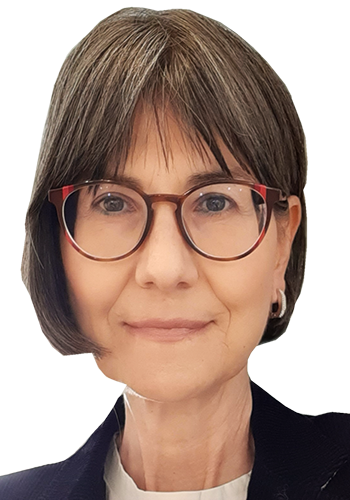
Dra. Carmen Gierden Vega (PTUN – Coordinator): lexicological characterisation of the German language and development of bilingual glossaries; lexical innovations in contact situations and sources of nomination; syntactic collocations, chunking and shared cultural expressions.
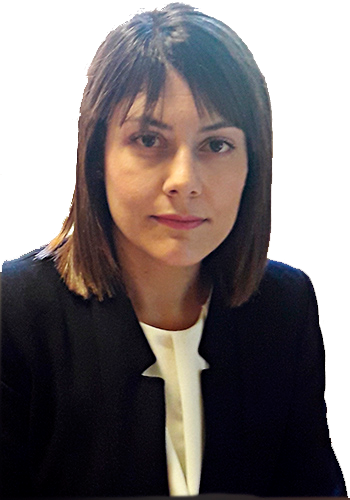
Dra. Beatriz Burgos Cuadrillero (PTUN): comparative studies; lexical morphology; didactic approaches to the lexicon in the field of German as a foreign language; vocabulary acquisition.
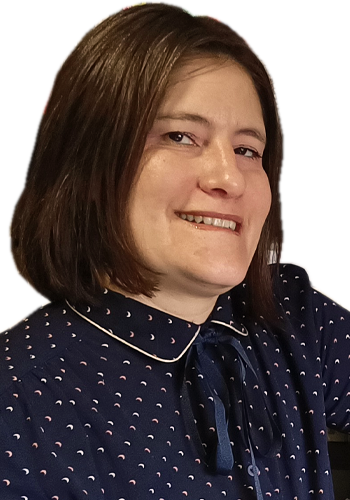
Dra. Emma Bahíllo Sphonix-Rust (PTUN): varieties of lexical change; lexiculture of the French language; language transfer and interference; translation.
Collaborating and associate members:
Dirk Paul Hofmann (Teacher for special tasks at the SHR Berlin University of Applied Sciences -Germany): teaching innovation in lexical acquisition; further and continuing education; teacher training; digitalisation and lexical acquisition; AI.
Biljana Kolundzija Gavranovic (Researcher, UVa): marketing and international business studies; website development; specialised lexicology and contact linguistics; internationalisms in second- and third-language teaching.
Lucie Lacoste (PRAS, UVa): interculturality; language contact phenomena; contrastive study of specific linguistic elements and specialised languages.
Dra. Barbara Heinsch (PTUN, Universidad de Oviedo): language policies in the European Higher Education Area; comparative studies; technical translation; language-acquisition methodology.
Dra. Emma García Sanz (Permanent Teaching Staff, University of Duisburg-Essen, Essen -Germany): intercultural mediation, development of multilingual glossaries, technological innovation in lexical acquisition and learning; language assessment and certification (CEFR), open educational resources.
Dra. Patricia Manjavacas Sneesby (Permanent Teaching Staff, Friedrich Schiller University of Jena -Germany): style correction (Spanish and English as foreign languages); translation of specialised languages; specialised and cognitive lexicology.